How to Choose the Right Laser Facial Treatment
Learn how to choose the right laser facial treatment for your skin type and concerns, from redness and acne to pigmentation, fine lines, and acne scars. Compare laser types, downtime, safety, and expected sessions to find the best option for your skin.

Fading discoloration, reducing fine lines, and smoothing texture — laser facial treatments can address a broad spectrum of skin concerns. But achieving noticeable results safely requires matching the specific laser technology to your skin concern, your skin tone, and the recovery window your lifestyle accommodates.
Choosing a Laser Facial at a Glance:
- Intensity: Non-ablative lasers deliver gradual results with minimal disruption; ablative lasers resurface tissue aggressively for dramatic single-session remodeling.
- Downtime: Non-ablative treatments involve zero to 3 days of mild redness; ablative treatments typically require 7 to 21 days of active healing, peeling, and strict sun avoidance.
- Safety by Skin Tone: Melanin absorbs specific light wavelengths. Light skin (Fitzpatrick I–III) tolerates most wavelengths; deeper skin (Fitzpatrick IV–VI) requires bypass wavelengths (like 1064 nm Nd:YAG) to eliminate burn and hyperpigmentation risks.
- Treatment Match: Vascular concerns (redness, veins) require hemoglobin-targeting lasers (PDL/KTP); textural scarring and deep wrinkles require water-targeting, collagen-remodeling lasers (fractional Er:YAG/CO₂).
What Is a Laser Facial and How Does It Work?
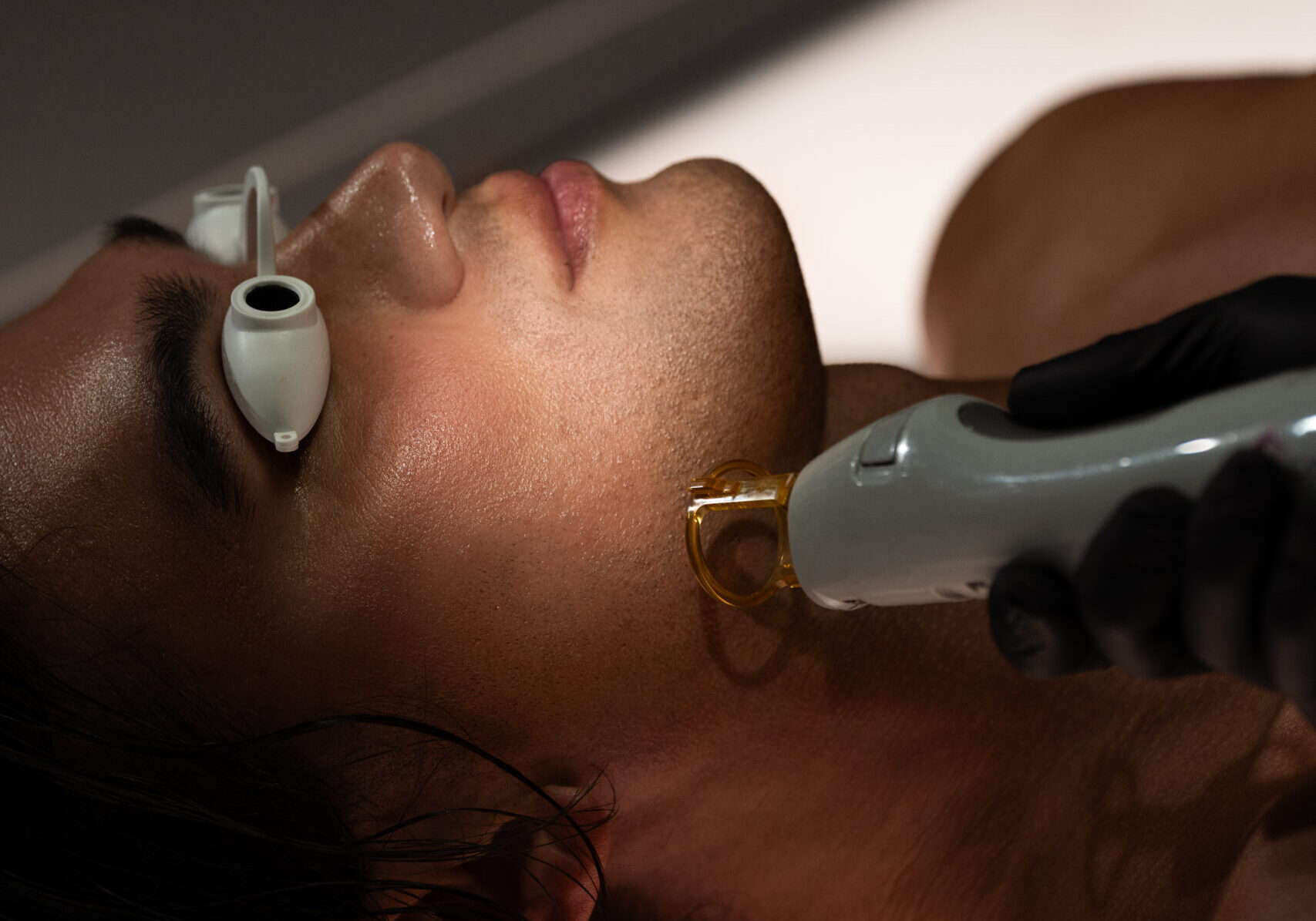
A laser facial treatment is a skin rejuvenation procedure that uses concentrated, single-wavelength light energy to treat targeted chromophores, specifically melanin (pigment), hemoglobin (blood vessels), or water (collagen tissue), in the skin.
By converting light into thermal energy, the laser eliminates damaged surface cells, breaks apart excess pigment, collapses broken capillaries, or triggers a wound-healing response that stimulates fresh collagen and elastin production without harming non-targeted surrounding tissue.
Through heat, lasers can improve the appearance of common skin concerns like texture, signs of aging, and discoloration. Depending on how your skin absorbs the light, laser facials can target different skin levels and concerns, from deep renewal to address major texture and signs of aging to surface-level redness or hyperpigmentation.
Aggressive vs. Gentle Lasers
Laser facial treatments vary in intensity, with a modern shift toward gentler lasers that deliver gradual results without disrupting daily life.
- Ablative (Aggressive): Removes top layers of skin. Dramatic results but involves pain, peeling, and 1–2 weeks of hiding indoors.
- Non-Ablative (Gentle): Heats underlying tissue without damaging the surface. Focuses on consistency over aggression (zero to minimal downtime).
Non-ablative lasers are the gentle option. They stimulate the skin without damaging or removing any layers. Some can leave the skin feeling a little warm or appearing red for up to a few days, but they don't stop you from going outside and sticking to your daily routine.
Ablative lasers are the more intensive option. They actually remove layers of skin, like exfoliation turned up to 100, often while also stimulating lower layers. As a result, they often leave the skin extremely sensitized, requiring extreme sun avoidance and a diligent aftercare routine, occasionally with the use of painkillers.
Selecting the Best Facial Laser Treatment for You
Is a laser treatment safe for your skin type? What concern are you hoping your laser facial will treat? Here’s how to find the right laser facial for you.
Step 1: Identify Your Fitzpatrick Skin Type (Safety & Darker Skin Tones)
Providers use the Fitzpatrick scale to determine your skin tone and whether a laser treatment will be safe.
Melanin (the pigment in the skin) can absorb light at certain wavelengths, so some laser treatments are not FDA-cleared for deeper skin tones.
Skin types I-III are lighter, so they can typically receive all laser treatments. Skin types IV-VI are deeper and will need to take greater caution when choosing a laser facial.
So first, use this list to identify your skin type:
- Type I: Very fair to light skin that never tans but burns quickly.
- Type II: Light to medium-light skin that can tan slightly but with effort. Sun exposure usually causes sunburn.
- Type III: Medium skin that can burn or tan, and may develop a tan after sunburn.
- Type IV: Medium-dark skin that tans easily and rarely gets sunburned. More likely to develop hyperpigmentation.
- Type V: Dark skin that tans very easily (often by several shades) and rarely gets sunburned. Has a higher chance of developing hyperpigmentation.
- Type VI: Very dark skin that never burns.
The Nd:YAG 1064nm wavelength that we use for the Sev Skin Laser Facial is the industry's safest laser for melanin-rich skin (Types IV–VI). It bypasses surface pigment, eliminating the risk of burns associated with more powerful lasers.
Step 2: Define Your Skin Goals
Lastly, you want to choose a laser facial that will actually help correct your specific skin concern. Most types of laser treatments can help with a few different concerns, often in different ways.
- If you have active acne or diffuse redness: Choose a gentle Laser Facial (Nd:YAG 1064 nm)
- If you have vascular rosacea or broken capillaries: Choose PDL (Vbeam 595 nm)
- If you want early anti-aging with 24-hr recovery: Choose Clear + Brilliant (1440/1927 nm)
- If you have deep acne scarring or severe laxity: Choose Ablative Fractional CO2/Er:YAG
Best for Fine Lines and Loss of Elasticity
Laser treatments excel at addressing fine lines and reduced firmness. Laser energy is absorbed by water in the skin, creating controlled heat that stimulates collagen and elastin production.
For early dynamic lines and proactive maintenance ("prejuvenation"), gentle fractional non-ablative treatments like Clear + Brilliant stimulate fibroblast activity with negligible downtime. For established, static wrinkles and pronounced skin laxity, deeper fractional non-ablative (Fraxel) or ablative resurfacing (CO₂ or Er:YAG) is necessary to replace aged dermal tissue.
Best for Scars and Texture
More pronounced acne scars and textural irregularities often require fractional ablative treatments, such as Fraxel or CO2 laser resurfacing. These treatments remove or vaporize microscopic columns of damaged tissue, prompting more significant collagen remodeling.
Milder laser facials may improve very superficial texture, but they are generally better for prevention and maintenance than for correcting established scarring. Scars can also respond well to complementary treatments such as microneedling, which creates controlled injury to stimulate collagen and elastin.
Best for Acne and Clogged Pores
Acne-prone skin often benefits from milder laser facials that are less likely to aggravate inflammation. The heat helps reduce bacteria counts and oil production.
The Laser Facial is designed for this purpose: its gentle Nd:YAG treatment targets blemishes and redness while supporting clearer, brighter skin, with no downtime. Clear + Brilliant may also help with enlarged pores and mild textural irregularities, though it is generally better suited to concerns like early sun damage and fine lines.
Best for Redness and Sensitivity
Vascular conditions require laser wavelengths targeting oxyhemoglobin inside dilated blood vessels.
- For diffuse redness and flushing: A 1064-nm Nd:YAG laser gently collapses micro-capillaries while strengthening dermal support tissue, making it safe for all complexions.
- For discrete broken capillaries (telangiectasias), spider veins, or angiomas: Pulsed-dye lasers (PDL 595 nm, such as Vbeam) or KTP lasers (532 nm, such as Excel V) are more targeted, coagulating the visible vessel so the body can reabsorb it over several days.
(Note: Lasers should be used for background redness and vascular control, but never administered directly over an active inflammatory rosacea flare-up).
Best Lasers for Hyperpigmentation, Melasma, and Sun Spots
Treating pigment requires identifying whether the discoloration is epidermal (surface sun freckles) or dermal/hormonal (melasma, post-inflammatory hyperpigmentation).
- Sun damage and age spots: Fractional thulium lasers (such as the 1927 nm handpiece of Clear + Brilliant or Fraxel) target the epidermal layer to rapidly exfoliate superficial melanin deposits.
- Melasma and darker complexions: Heat can provoke rebound pigmentation. For Fitzpatrick types IV–VI or stubborn melasma, high-heat ablative treatments must be avoided; conservative protocols using non-ablative fractional lasers deliver the safest results.
Step 3: Consider Intensity and Downtime
Are you looking for something quick and light you can get during your lunch break, or are you open to something more intensive that may put you out of commission for up to several weeks?
More intensive treatments often deliver noticeable results faster, at the cost of significant downtime, while gentler treatments are the opposite: slow, gradual results, but consistency is easy as there is little to no downtime.
Gentler options like the Sev Skin Laser Facial are often best for prevention and gradual improvement, without any downtime and only a little redness post-treatment.
Non-ablative, fractional lasers like Clear + Brilliant help improve the look of lines and firmness with a shorter series of treatments, and with only mild side effects like slight redness and warmth.
Ablative lasers like the CO2 laser can create results in 1 or 2 sessions, but with significant side effects such as redness, stinging, flaking, and even scabbing in the case of very deep resurfacing.
Step 4: Consider Your Budget
Laser facial treatments can range in cost from as little as $120 per session with promotional pricing at Sev Skin up to $4500 for a package of ablative treatments.
Cost depends on the treatment type and intensity, the number of treatments you need, the provider, and whether you need additional clinical support (usually only needed with ablative CO2 laser treatment).
Packages and memberships typically lower the cost of each visit, so they are a good option if you’re hoping to achieve specific results that require a set number of treatments.
Questions to Ask Your Laser Specialist
Before committing to a laser treatment, first find answers to the following questions, either by looking online, reading reviews, or speaking with the provider directly.
- Is this laser FDA-cleared and safe for my specific skin tone?
- Do I need numbing cream for this treatment?
- Will my face be red or peeling tomorrow?
- Can I put makeup on immediately after the treatment?
- What are the post-care instructions?
Clinical Considerations and Contraindications
Before receiving a laser facial, check for contraindications and ask your provider if you have any concerns.
- Recent Isotretinoin (Accutane) Use: Most protocols require waiting 6 months post-treatment course
- Active Infections or Cold Sores: Facial lasers can reactivate the Herpes Simplex Virus (HSV-1)
- Recent Sun Exposure or Self-Tanner: An active sunburn, recent UV tanning, or topical self-tanner increases epidermal melanin absorption, creating a high risk of surface burns and post-inflammatory hypopigmentation
- Pregnancy or Breastfeeding: Elective aesthetic laser treatments are generally deferred due to melasma risk and limited safety clinical trials
Book Your First Laser Treatment
Want to try a laser facial treatment at Sev Skin? Here’s what you can choose:
If you want to start with something ultra-gentle and easy, our classic Laser Facial is the best choice. It’s a gentle, FDA-cleared Nd:YAG treatment that maintains collagen production and helps support clearer, more even-toned skin. It’s suitable for all skin types and skin tones, and doesn’t cause any discomfort or downtime.
If you’re looking for a treatment with faster results, Clear + Brilliant is also an excellent option. It’s a fractional laser treatment that helps minimize the appearance of dark spots, discoloration, and mild texture or fine lines in just a handful of sessions. It’s FDA-cleared, suitable for all skin tones, and it’s only slightly more intensive than the laser facial.
To get started, visit our booking page and look out for our intro offers so you can save on your first session.